
Most furniture is designed around a season. A trend report gets published. A palette gets agreed upon. A collection gets produced to match what retail data says people want right now. By the time it arrives in your home, it is already moving toward its expiration date. At House of Leon, we started from a different question entirely. Not what is selling. But where craft still lives.

How House of Leon Actually Begins a Collection
House of Leon was founded by twin brothers born and raised in Los Angeles who kept returning to the same feeling: that the furniture around them had lost its soul. Too much compromise. Too little care. Too few pieces made with intention and priced for real living.
Since opening in October 2021, every collection released by houseofleon.com has been grounded in a specific place. Not a Pantone color. Not a Pinterest board. A place where craft still carries memory, where materials are respected, details are deliberate, and nothing is rushed. That regional reference becomes the collection's vocabulary: its shapes, its materials, its weight, its finish.
The ethos is simple to say and harder to execute: old-world craftsmanship, reimagined. A return to material, weight, and construction. Furniture meant to be felt, lived with, and kept.
What It Means to Design Around a Region
There is a difference between furniture that references a place and furniture that is grounded in one. Referencing a place means borrowing its visual cues, a color palette that suggests the Mediterranean, a silhouette that recalls mid-century Europe. Being grounded in a place means understanding why those visual cues exist in the first place. What the climate demanded. What the available materials allowed. What the local craft tradition preserved over generations.
Each leon furniture collection is built on that second kind of relationship. A few examples of how that plays out:
- Milan: The brutalist iron frame of the Milan Collection is not decorative. It comes directly from the structural I-beam that defined Milan's post-war rebuilding. The weight of that reference is the point. The furniture carries the logic of architecture, not the logic of retail.
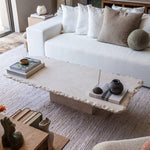
- Ojai: The Ojai Collection is built around the stillness of the Ojai Valley north of Los Angeles. White oak, natural finishes, organic shapes. The material palette was chosen because it behaves the way the valley feels: calm, unhurried, and honest about what it is.
- Provence: The powder-coated iron and Belgian boucle of the Provence Collection are not outdoor materials dressed up to look indoor-ready. They are materials chosen because the outdoor furniture tradition of southern France has always insisted that comfort and craft belong outside just as much as they belong inside.
- Shou Sugi Ban: An ancient Japanese technique of charring wood to preserve and strengthen it. Applied to contemporary furniture, the result is a finish that becomes more itself over time rather than degrading. The technique is hundreds of years old. The application is entirely new.
Trend-Driven vs Region-Driven Design: A Direct Comparison
| Design Approach | Starting Point | Material Logic | Lifespan of Relevance | What It Produces |
|---|---|---|---|---|
| Trend-driven | Retail data, seasonal reports | Whatever matches the palette | 2 to 3 years before it reads as dated | Furniture that was current |
| Region-driven | A place, a craft tradition, a material logic | Chosen for structural and cultural reason | Indefinite | Furniture that was built |
Where the Craft Actually Happens
Every wood piece in the House of Leon catalog is made at a family-owned atelier where mastery of woodworking and furniture construction has been passed down from generation to generation. The woods are sourced in the Mediterranean. The technique is not replicated from a spec sheet. It is carried forward by people who learned it from people who learned it before them.
That is not a romantic way of describing manufacturing. It is a precise description of why the joinery holds, why the finishes age the way they do, and why pieces from houseofleon.com do not look like anything else on the market. The reference is real. The craft is real. The result is furniture that carries both.
A Home That Knows Where It Comes From
The goal of every leon furniture collection is not to decorate a room. It is to give a room a point of view. A piece from the Milan Collection says something about structure and intention. A piece from Ojai says something about restraint and material honesty. A piece from Provence says that the boundary between inside and outside is a design choice, not a rule.
When you build a home around pieces that know where they come from, the result is a space that feels considered rather than assembled. It does not require everything to match. It requires everything to mean something. That is the standard House of Leon builds to. And it is the only standard worth building a home around.